🚀 Kafka Unleashed: The Backbone of Real-Time Data Processing! 🔥📊
🚀 Kafka Unleashed: The Backbone of Real-Time Data Processing! 🔥📊
In today’s hyper-connected world, where data is the new oil 🛢️, businesses can’t afford to wait. Enter Apache Kafka — a distributed streaming platform that’s redefining how companies handle real-time data at scale. But what exactly is Kafka? Why is it everywhere — from fintech to social media? Let’s break it down. 💡
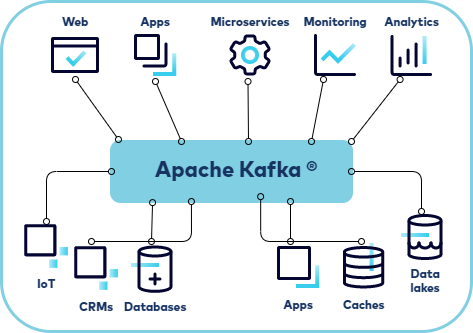
🧠 What is Apache Kafka?
Apache Kafka is an open-source distributed event streaming platform used by thousands of companies for high-performance data pipelines, streaming analytics, data integration, and mission-critical applications.
In simpler terms:
👉 Kafka is like a giant, real-time message bus that lets applications publish and subscribe to streams of records in a fault-tolerant, scalable way.
🧐 Why Kafka? What’s the Big Deal?
Before Kafka, systems often relied on point-to-point communication (like REST APIs or database polling) which is:
- ❌ Slow
- ❌ Error-prone
- ❌ Not real-time
Kafka solved this with:
✅ High throughput
✅ Low latency
✅ Horizontal scalability
✅ Durability and fault tolerance
It’s like moving from letters-by-post 📬 to WhatsApp messages 💬 — instant, reliable, and scalable.
🌟 Core Features of Kafka (with Real Use-Cases!)
1. 📦 Publisher-Subscriber (Pub/Sub) Model
- What it does: Producers publish data to Kafka topics, and consumers subscribe to them.
- Use Case: A stock trading app 📈 where real-time market data is published, and different modules (like pricing engine, UI, alert system) consume this data in parallel.
2. 🧱 Durability and Fault Tolerance
- What it does: Kafka stores messages on disk and replicates them across servers.
- Use Case: Banking transactions 💳 — even if a node fails, the transaction logs are safe and can be recovered.
3. 📡 Scalability
- What it does: Kafka can scale horizontally by adding more brokers or partitions.
- Use Case: A food delivery platform 🍕 handling thousands of orders per second during peak time.
4. 🕰️ Real-Time Streaming
- What it does: Kafka enables event stream processing via Kafka Streams or tools like Apache Flink.
- Use Case: Fraud detection 🚨 in credit card payments, where anomalies are detected instantly and blocked.
5. 📚 Message Retention
- What it does: Kafka can store messages for a configured time (from minutes to forever).
- Use Case: Analytics dashboards 🧮 that need to reprocess historical data when queries change.
6. 🔌 Integration Friendly
- What it does: Kafka Connect allows easy integration with databases, storage systems, and stream processors.
- Use Case: Syncing data from MySQL to Elasticsearch in real-time for search functionality 🔍.
🧪 Example: Kafka in Action
Use Case: E-Commerce Order Tracking System 🛍️
Flow:
- 🧑💻 Customer places an order → “Order Placed” event sent to Kafka.
- 🏭 Warehouse Service picks it up → updates inventory.
- 🚚 Logistics Service subscribes → schedules delivery.
- 📱 Notification Service → sends email/SMS to customer.
Each of these services are decoupled and can work independently — thanks to Kafka! 🧩
🏢 How Businesses Can Leverage Kafka
✅ Microservices Communication
Kafka acts as a central nervous system for microservices to exchange data asynchronously and reliably.
✅ Data Lakes and Pipelines
Ingest data from multiple sources (apps, logs, DBs) and stream into data lakes (like S3) or analytics engines in real time.
✅ Customer Behavior Tracking
Track user activity in real-time across platforms to offer personalized recommendations, promotions, and insights. 📊
✅ IoT and Sensor Networks
Kafka can handle millions of sensor updates in real-time for industries like manufacturing, agriculture, and smart cities. 🌆
🛠️ Getting Started with Kafka (Code Example)
Here’s a quick example using Python and Kafka-Python:
🔸 Producer (sending messages):
from kafka import KafkaProducer

producer = KafkaProducer(bootstrap_servers='localhost:9092')
producer.send('order_topic', b'Order ID 12345 placed')
producer.flush()
🔹 Consumer (receiving messages):
from kafka import KafkaConsumer

consumer = KafkaConsumer('order_topic', bootstrap_servers='localhost:9092')

for message in consumer:
    print(f"Received: {message.value.decode()}")
Simple, fast, and powerful! 💥
⚙️ Tools in the Kafka Ecosystem

🔚 Final Thoughts: Kafka is More Than a Queue 🎯
Kafka is not just a messaging queue — it’s a complete event streaming platform. Whether you’re building real-time analytics, high-performance microservices, or event-driven systems, Kafka offers the speed, reliability, and flexibility modern apps need.
💬 “Kafka is to data what the internet is to communication — real-time, scalable, and unstoppable.”
💬 Let’s Connect
If you found this useful, share it with your tech circle! 💼
Want more blogs like this on backend tools, DevOps, or system design?
🔔 Follow me for regular posts that decode complex tech with simplicity!


Comments
Post a Comment