🏗️ Exploring System Design in Depth
🏗️ Exploring System Design in Depth
From Fundamentals to Scalable Architectures (with Real-World Examples) 🌍⚙️
“Great systems aren’t built by chance — they’re designed with clarity, trade-offs, and foresight.”
System Design is one of the most critical skills for backend, full-stack, and senior engineers. It’s not about coding — it’s about thinking at scale 🧠.
In this blog, we’ll cover:
✅ Core concepts
✅ Key terminologies
✅ Architecture patterns
✅ Tools & technologies
✅ Real-world examples
✅ Advanced interview Q&A
Let’s dive in 👇
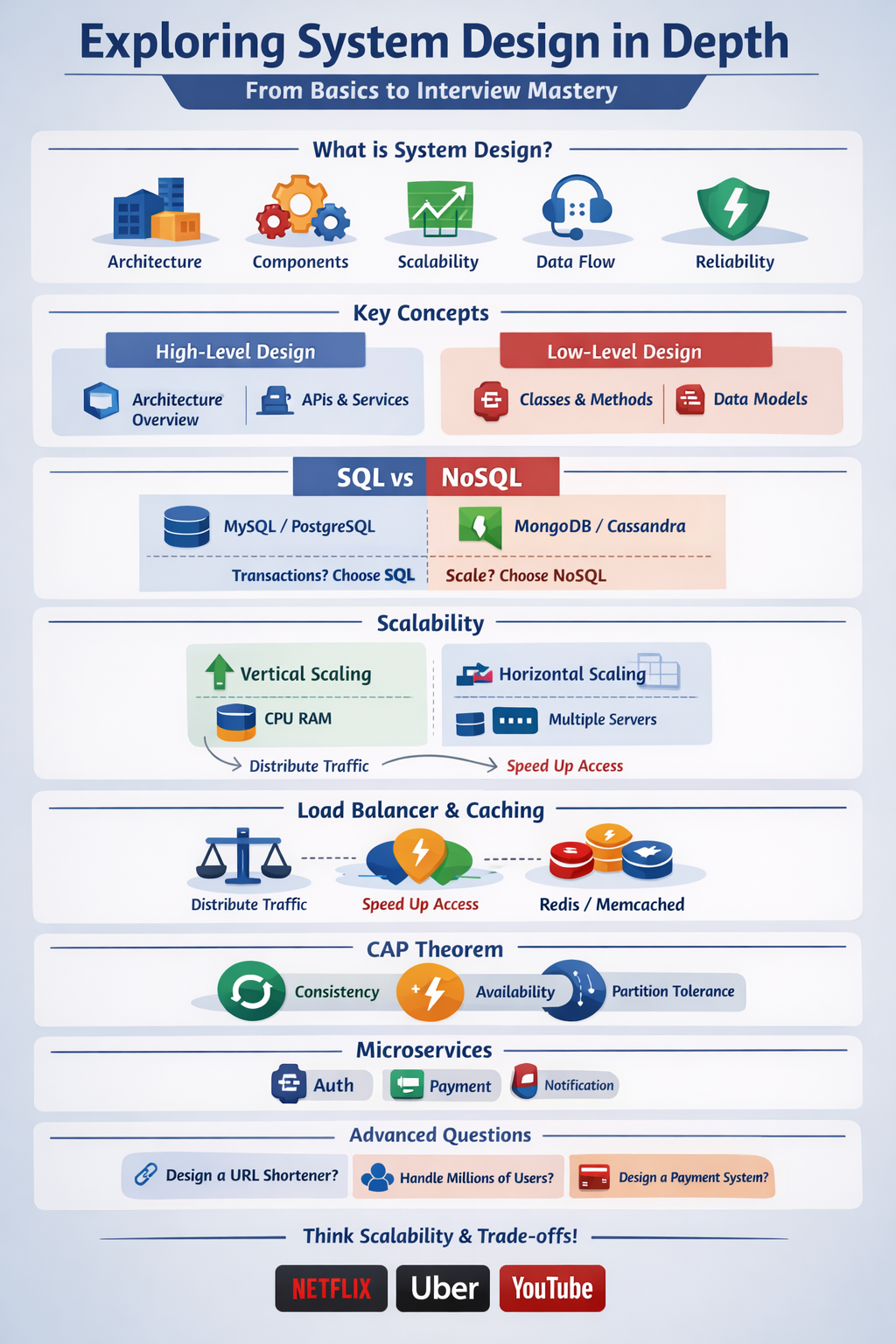
🔹 What is System Design?
System Design is the process of defining:
- Architecture 🏛️
- Components 🧩
- Data flow 🔄
- Communication 🕸️
- Scalability & reliability ⚡
🎯 Goal:
Build a system that is:
- Scalable
- Reliable
- Maintainable
- Cost-efficient
📌 Example:
Designing Instagram, Uber, YouTube, or a Payment Gateway.
🔹 Functional vs Non-Functional Requirements
🧩 Functional Requirements
👉 What the system should do
Examples:
- User can upload photos 📸
- User can like and comment ❤️
- User can follow other users 👥
⚙️ Non-Functional Requirements
👉 How well the system performs
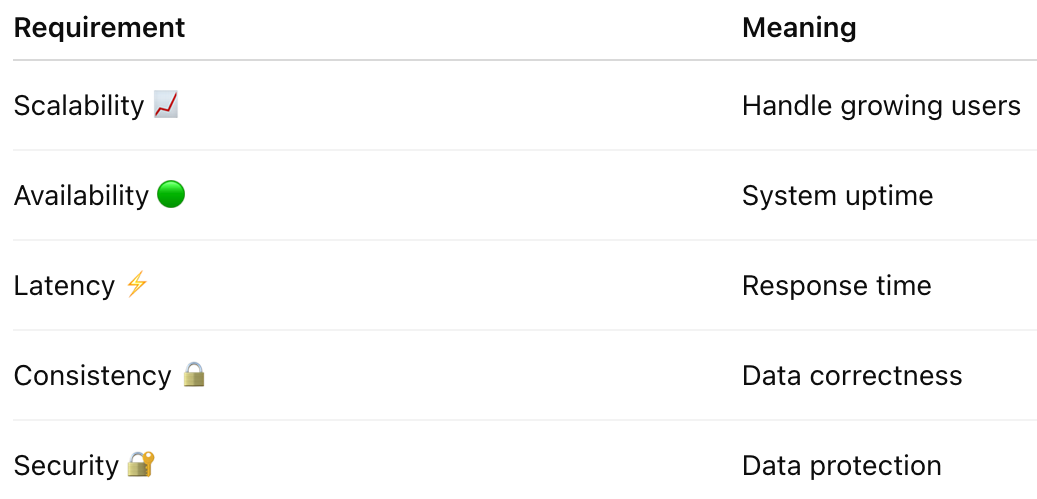
📌 Interview Tip: Always clarify these first!
🔹 High-Level vs Low-Level Design
🗺️ High-Level Design (HLD)
- Services
- Databases
- APIs
- Communication flow
📌 Example:
Client → API Gateway → Auth Service → Media Service → DB🔧 Low-Level Design (LLD)
- Classes
- Methods
- Data models
- Algorithms
📌 Example:
class User
  has_many :posts
  has_many :followers
end
🔹 Scalability: Vertical vs Horizontal
⬆️ Vertical Scaling
- Increase CPU / RAM
- Easy but limited
➡️ Horizontal Scaling
- Add more servers
- Complex but scalable 🚀
📌 Modern systems prefer Horizontal Scaling
🔹 Load Balancer ⚖️
Distributes traffic across servers.
Popular Algorithms:
- Round Robin 🔄
- Least Connections 📉
- IP Hashing 🧮
Tools:
- Nginx
- HAProxy
- AWS ALB / ELB
📌 Example:
User → Load Balancer → App Server 1 / 2 / 3🔹 Databases: SQL vs NoSQL 🗄️
🧱 SQL (Relational)
- MySQL
- PostgreSQL
✔ Strong consistency
✔ Structured schema
🌊 NoSQL
- MongoDB
- DynamoDB
- Cassandra
✔ Flexible schema
✔ Massive scale
📌 Rule of Thumb:
Transactions → SQL
Scale & Speed → NoSQL
🔹 Database Sharding 🧩
Splitting data across databases.
Types:
- Range-based
- Hash-based
- Geo-based 🌍
📌 Example:
Users A–M → DB1
Users N–Z → DB2
🔹 Caching ⚡ (Speed Booster)
Avoid hitting DB every time.
Types:
- In-memory cache
- Distributed cache
Tools:
- Redis
- Memcached
📌 Example:
Client → Cache → DB (only on cache miss)🔹 CAP Theorem 🧠
You can only guarantee 2 out of 3:
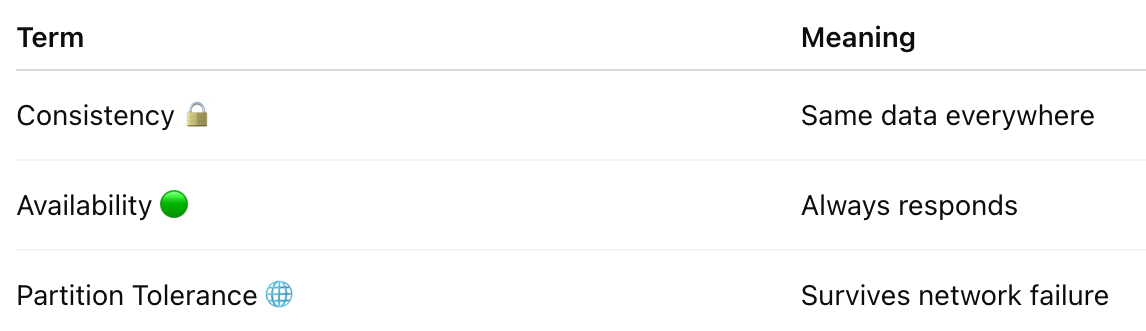
📌 Examples:
- CP: HBase
- AP: Cassandra
- CA: Traditional RDBMS (single node)
🔹 Message Queues & Async Processing 📩
Decouple services & handle spikes.
Tools:
- Kafka
- RabbitMQ
- AWS SQS
📌 Example:
Order Service → Queue → Email Service✔ Improves reliability
✔ Handles high traffic
🔹 Microservices Architecture 🧩
Each service:
- Independent
- Own database
- Own deployment
📌 Example Services:
- Auth Service 🔐
- Payment Service 💳
- Notification Service 🔔
Tools:
- Docker 🐳
- Kubernetes ☸️
- Service Mesh (Istio)
🔹 API Design 🌐
REST Principles:
- Stateless
- Resource-based
- HTTP verbs
📌 Example:
GET /users/1
POST /orders
GraphQL (Advanced):
- Fetch exact data
- Single endpoint
🔹 Observability & Monitoring 👀
What to Monitor:
- Logs 📜
- Metrics 📊
- Traces 🔍
Tools:
- Prometheus
- Grafana
- ELK Stack
- New Relic
🔹 Security in System Design 🔐
- HTTPS
- OAuth / JWT
- Rate Limiting 🚦
- Encryption (at rest & in transit)
📌 Example:
User → Auth Token → Protected API🎯 Advanced System Design Interview Questions (With Answers)
❓ 1. How would you design a URL Shortener like Bitly?
Answer:
- API Gateway
- Hashing (Base62)
- DB for mapping
- Cache for hot URLs
- Load Balancer
- Analytics Service
📌 Key Challenge: Collision handling
❓ 2. How do you handle millions of concurrent users?
Answer:
- Horizontal scaling
- Load balancers
- Caching
- Async queues
- CDN for static content 🌍
❓ 3. How do you ensure data consistency in microservices?
Answer:
- Saga Pattern
- Eventual consistency
- Message queues
- Idempotent APIs
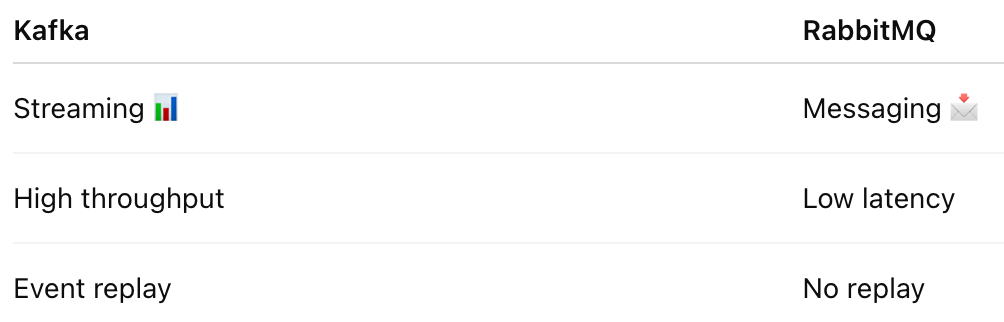
❓ 4. Difference between Kafka and RabbitMQ?
❓ 5. How would you design a payment system?
Answer:
- Strong consistency
- Idempotency keys
- Transaction logs
- Retry mechanism
- Audit trail
🚀 Final Thoughts
System Design is a mindset, not a framework.
🧠 Think in trade-offs, not perfection.
Mastering System Design will:
- Crack senior interviews 💼
- Improve architectural thinking 🏗️
- Make you a 10x engineer 🚀


Comments
Post a Comment