🏆 Win Every Communication: The Psychology & Habits Behind Speaking Like a Leader 💬✨
🏆 Win Every Communication: The Psychology & Habits Behind Speaking Like a Leader 💬✨
(How to Connect, Influence, and Build Strong Relationships Through Words)
Communication is not just about talking…
It’s about being understood, trusted, and remembered.
In daily life, careers, relationships, and leadership —
your communication decides your success more than your knowledge.
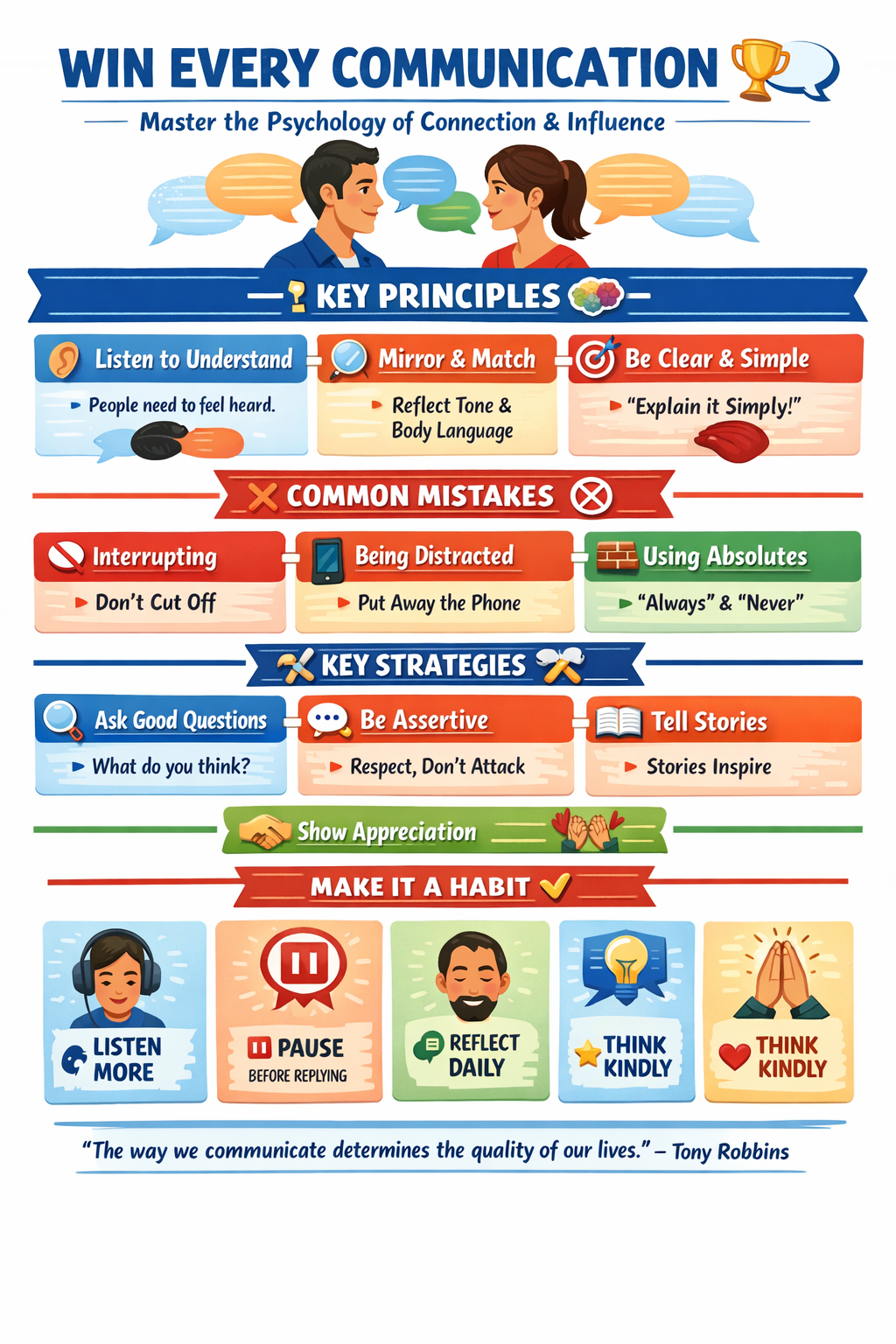
Let’s break down the psychology, mistakes, and strategies that help you win every conversation. 🚀
🌟 What Does “Winning Communication” Really Mean?
Winning communication doesn’t mean defeating someone.
It means:
✅ Creating understanding
✅ Building trust
✅ Influencing positively
✅ Reducing conflict
✅ Making people feel valued
“People will forget what you said, but they will never forget how you made them feel.”
— Maya Angelou
🧠 Key Psychological Principles of Great Communication
1. 👂 The Power of Feeling Heard (Validation Effect)
Humans crave one thing deeply:
To feel understood.
Even if you disagree, validation calts emotions.
Example:
❌ “You’re wrong, it’s not a big deal.”
✅ “I understand why that feels frustrating.”
This activates psychological safety.
“Listening is often the only thing needed to help someone.”
2. 🪞 Mirroring Builds Instant Connection
People trust those who feel familiar.
Mirroring means subtly matching:
- Tone
- Energy
- Body language
- Words
Example:
Them: “I’m overwhelmed with deadlines.”
You: “That sounds overwhelming… deadlines can be intense.”
Connection increases naturally.
3. 🎯 The Rule of Clarity Over Complexity
Smart people don’t speak complex.
Smart communicators speak simple.
Example:
❌ “We should synergize our operational workflow.”
✅ “Let’s simplify the process so work becomes faster.”
“If you can’t explain it simply, you don’t understand it well enough.”
— Albert Einstein
4. ❤️ Emotion Comes Before Logic
Humans don’t respond to facts first.
They respond to feelings first.
Example in conflict:
❌ “Technically, I was correct.”
✅ “I see why you felt hurt. That wasn’t my intention.”
Emotions unlock understanding.
5. 🧩 People Don’t Want Advice, They Want Empathy
Most times, people want:
❌ Solutions
✅ Support
Example:
Friend: “I’m struggling a lot lately.”
Bad response: “Just stay positive.”
Good response: “I’m here. Want to talk about it?”
6. 🏅 The Reciprocity Principle
If you respect someone, they respect you back.
Communication is a mirror.
Smile → Smile
Kindness → Kindness
Aggression → Defense
🚫 Common Communication Mistakes That Destroy Conversations
1. ❌ Listening to Reply, Not to Understand
Most people wait for their turn to speak.
Instead, listen fully.
Habit:
Pause 2 seconds before replying.
2. ⚡ Interrupting
Interrupting signals:
“I matter more than you.”
Even if unintentional, it breaks trust.
3. 🧱 Using Absolutes: “Always” and “Never”
Example:
❌ “You never care about me.”
✅ “Sometimes I feel unheard.”
Absolutes create defensiveness.
4. 🎭 Speaking Without Emotional Awareness
Tone matters more than words.
Same sentence:
- Calm tone = caring
- Harsh tone = attacking
5. 📱 Distracted Communication
Looking at your phone while someone speaks says:
“You’re not important.”
Presence is powerful.
🛠️ Key Strategies to Become a Great Communicator
1. 🎤 Speak With Structure
Use:
Point → Example → Impact
Example:
Point: “We need better teamwork.”
Example: “Tasks are getting delayed.”
Impact: “Collaboration will help us deliver faster.”
Clear communication = leadership.
2. 🧠 Ask Better Questions
Good communicators don’t talk more…
They ask more.
Examples:
- “What do you think?”
- “How did that make you feel?”
- “What would help right now?”
Questions create depth.
3. ✨ Use Names & Appreciation
“Thanks, Raj. That was helpful.”
People love recognition.
4. 🔥 Master the Art of Assertiveness
Assertive means:
Respecting yourself + respecting others.
Example:
❌ Passive: “It’s okay…”
❌ Aggressive: “You must do it!”
✅ Assertive: “I’d appreciate it if we could do this by tomorrow.”
5. 🕊️ Communicate to Resolve, Not to Win
Instead of:
“I need to prove I’m right…”
Think:
“I want us to understand each other.”
6. 📖 Storytelling Beats Facts
Facts inform.
Stories inspire.
Example:
Instead of:
“Our product improves productivity.”
Say:
“One user saved 3 hours daily and finally had time for family.”
🧘 How to Make Great Communication a Habit (Daily Practice)
✅ Habit 1: Listen 70%, Speak 30%
In every conversation, aim to listen more.
✅ Habit 2: Practice One Pause
Before responding, pause for clarity.
That pause prevents emotional reactions.
✅ Habit 3: Reflect Daily
Ask yourself:
- Did I interrupt today?
- Did I truly listen?
- Did I communicate kindly?
Improvement comes through reflection.
✅ Habit 4: Use the “3 Kind Rules”
Before speaking, ask:
- Is it true?
- Is it necessary?
- Is it kind?
✅ Habit 5: Communicate With Intention
Start conversations with purpose:
- To connect
- To solve
- To support
- To understand
🌍 Communication Is the Ultimate Life Skill
Your words can:
🌱 Build relationships
🏗️ Create opportunities
❤️ Heal conflicts
🚀 Inspire people
🔥 Change your life
“The way we communicate with others and ourselves determines the quality of our lives.”
— Tony Robbins
🎯 Final Thought: Win Every Communication
To win every conversation:
✅ Listen deeply
✅ Speak clearly
✅ Respect emotions
✅ Ask better questions
✅ Make others feel valued
Communication isn’t talent…
It’s a daily habit. 💬✨
📌 Quick Communication Cheat Sheet
🧠 Listen more than you speak
❤️ Validate feelings
🎯 Be clear and simple
🔥 Avoid absolutes
✨ Ask meaningful questions
🏆 Communicate to connect, not to compete


Comments
Post a Comment