🚀 DevOps Mastery: From Code to Cloud — The Ultimate Guide to Speed, Quality & Perfection ⚙️🔥
🚀 DevOps Mastery: From Code to Cloud — The Ultimate Guide to Speed, Quality & Perfection ⚙️🔥
In today’s fast-paced tech world, delivering software quickly without compromising quality is the real challenge. That’s where DevOps comes in — a culture, philosophy, and set of practices that bridge the gap between Development and Operations.
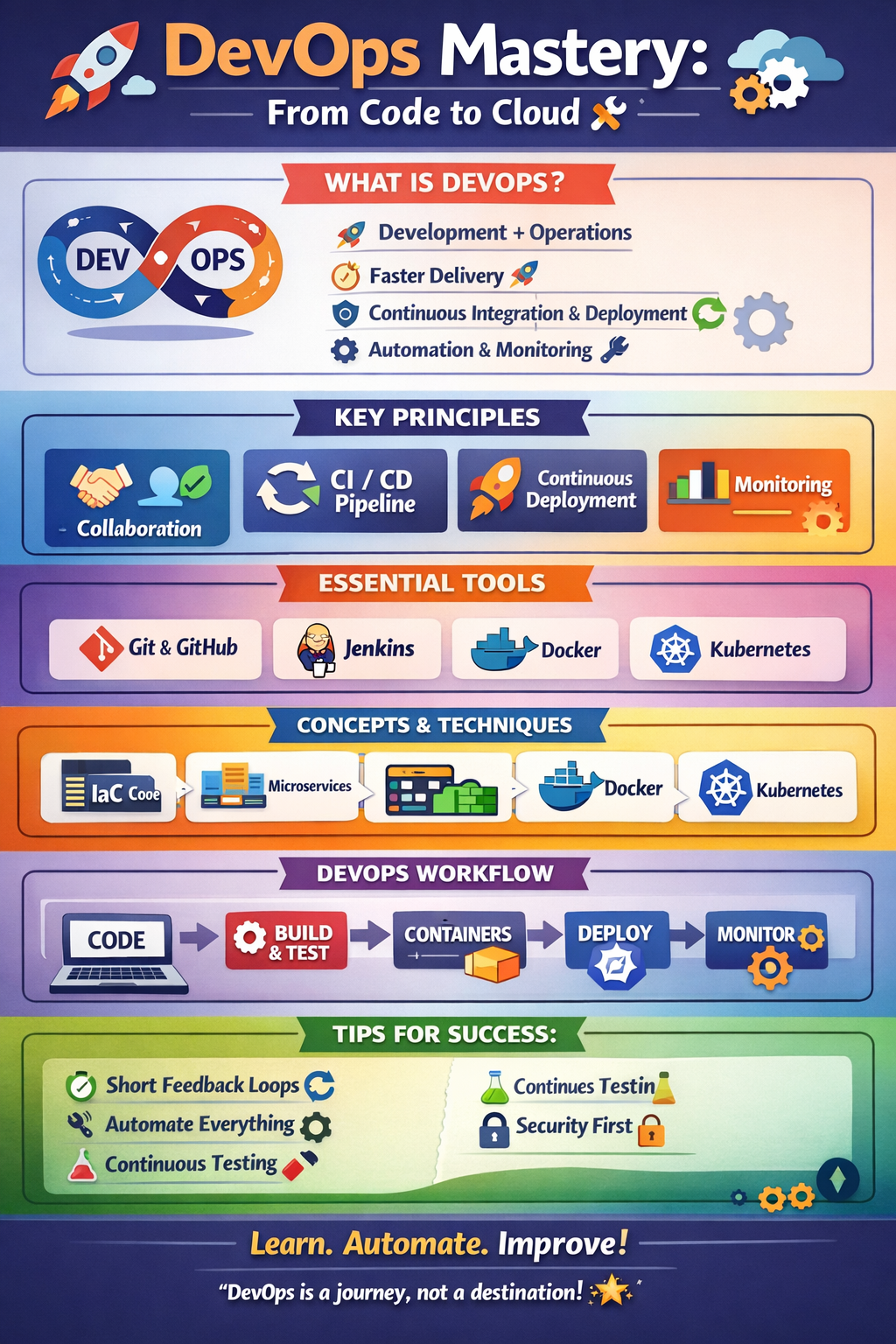
Let’s break it down in a simple, powerful, and practical way 💡👇
🌟 What is DevOps?
DevOps = Development + Operations
It’s a culture + practices + tools that aim to:
- 🚀 Deliver software faster
- 🔁 Improve collaboration
- 🛠️ Automate processes
- 📈 Ensure reliability & scalability
👉 Goal: Continuous delivery of high-quality software with minimal friction.
🧠 Core Principles of DevOps
1. 🤝 Collaboration & Communication
Break silos between teams.
Example:
- Dev team writes code
- Ops team deploys it
- In DevOps → both work together 💪
2. 🔄 Continuous Integration (CI)
Developers merge code frequently into a shared repo.
Example:
git push origin mainTriggers:
- Build ✔️
- Test ✔️
3. 🚀 Continuous Delivery (CD)
Code is always ready to be deployed.
Example:
- After CI → code goes to staging automatically.
4. ⚡ Continuous Deployment
Every change is automatically deployed to production.
Example:
- Push code → live instantly 🌍
5. 📊 Monitoring & Feedback
Track performance and fix issues quickly.
Example:
- Monitor CPU usage, errors, logs 📉
6. 🤖 Automation First
Automate repetitive tasks.
Example:
- Auto testing
- Auto deployment
- Auto scaling
📚 Key DevOps Concepts
🔹 Infrastructure as Code (IaC)
Manage infrastructure using code.
Tool Example:
resource "aws_instance" "example" {
  ami = "ami-123456"
  instance_type = "t2.micro"
}
🔹 Microservices Architecture
Break applications into smaller services.
Example:
- User Service 👤
- Payment Service 💳
- Notification Service 🔔
🔹 Containerization
Package apps with dependencies.
Example: Dockerfile
FROM ruby:3.2
WORKDIR /app
COPY . .
RUN bundle install
CMD ["rails", "server"]
🔹 Orchestration
Manage containers at scale.
Example:
- Auto-scaling pods in Kubernetes 📦
🔹 Version Control
Track code changes.
Tool: Git
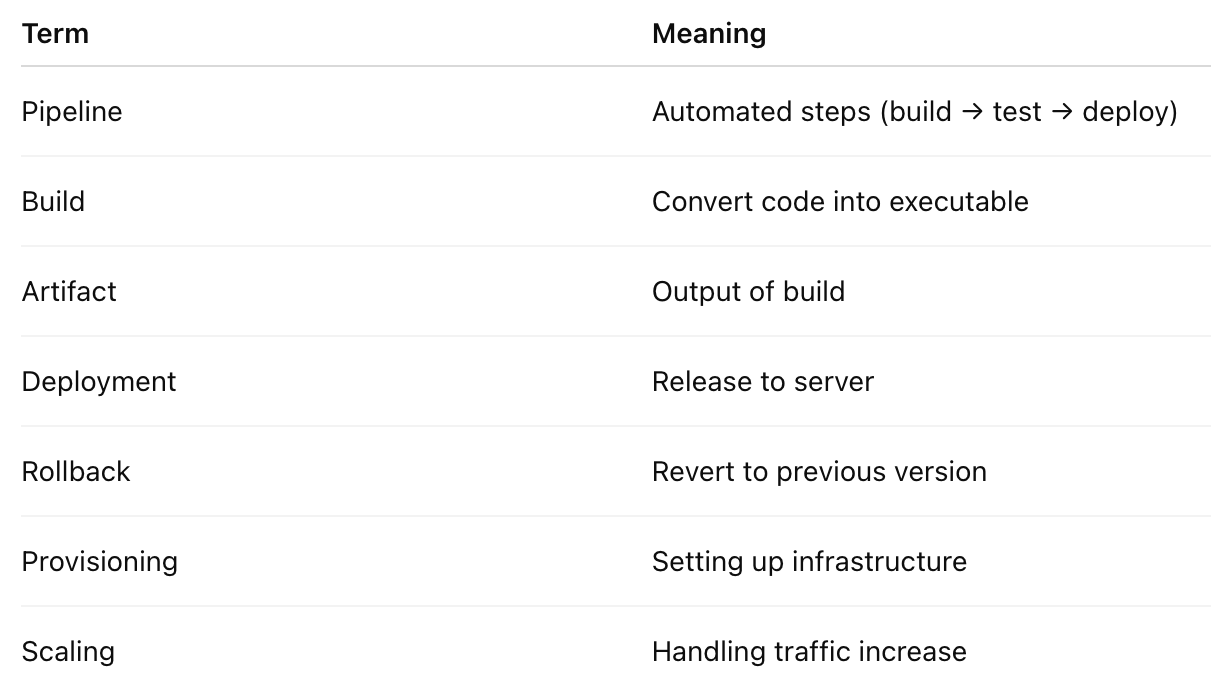
📖 DevOps Terminologies (Simplified)
🛠️ Popular DevOps Tools (With Use Cases)
🔧 Version Control
- Git, GitHub, GitLab
👉 Manage code and collaboration
⚙️ CI/CD Tools
- Jenkins
- GitHub Actions
- GitLab CI
👉 Automate build & deployment
🐳 Containerization
- Docker
👉 Package application
☸️ Orchestration
- Kubernetes
👉 Manage containers at scale
☁️ Cloud Platforms
- AWS, Azure, GCP
👉 Host applications
🏗️ IaC Tools
- Terraform
- Ansible
👉 Automate infrastructure
📊 Monitoring Tools
- Prometheus
- Grafana
👉 Track system performance
🔥 End-to-End DevOps Flow (Real Example)
Imagine a Ruby on Rails app 👇
- 👨💻 Developer writes code
- 📤 Push to GitHub
- ⚙️ GitHub Actions runs tests
- 🐳 Docker builds image
- ☸️ Kubernetes deploys container
- ☁️ AWS hosts app
- 📊 Grafana monitors performance
🎯 Result: Fully automated lifecycle!
💎 How to Achieve Perfection in Development Models
🧩 1. Choose the Right Model
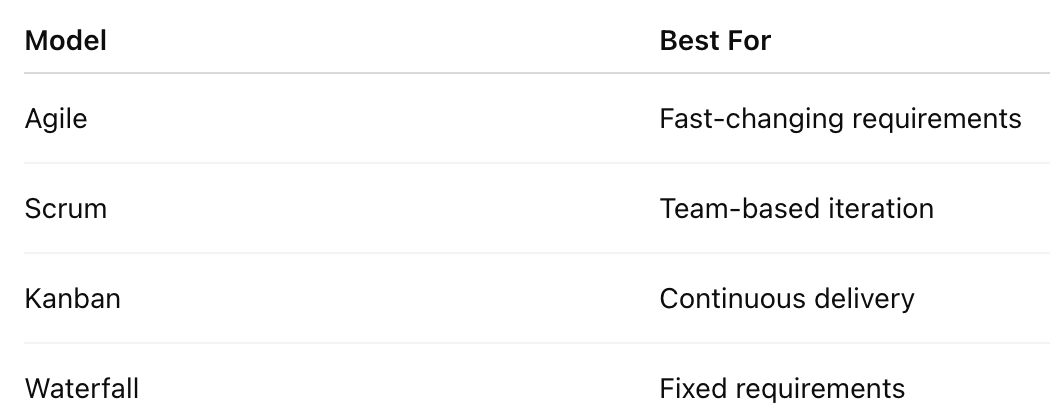
👉 Pro Tip: Combine Agile + DevOps 🔥
🔁 2. Short Feedback Loops
- Deploy frequently
- Get user feedback fast
🧪 3. Test Everything
- Unit Tests
- Integration Tests
- End-to-End Tests
🤖 4. Automate EVERYTHING
- Builds
- Tests
- Deployments
- Monitoring
📈 5. Measure & Improve
Track:
- Deployment frequency
- Lead time
- Failure rate
🔐 6. Security First (DevSecOps)
- Scan vulnerabilities early
- Secure pipelines
🧠 7. Continuous Learning
- Learn new tools
- Optimize workflows
- Experiment 🚀
🧠 Pro-Level DevOps Hacks 💡
- 🔥 Use feature flags for safer releases
- ⚡ Implement blue-green deployment
- 🧪 Practice chaos engineering
- 🔄 Use canary releases
- 📦 Optimize Docker images for speed
🎯 Final Thoughts
DevOps is not just tools — it’s a mindset 💭
✔️ Collaborate
✔️ Automate
✔️ Monitor
✔️ Improve
👉 Mastering DevOps means delivering faster, better, and smarter software 🚀
💬 Quote to Remember
“DevOps is not a goal, but a never-ending process of continual improvement.” 🔁


Comments
Post a Comment