🚀 Mastering Software Deployment: From Code to Customer — A Complete Guide!
🚀 Mastering Software Deployment: From Code to Customer — A Complete Guide!
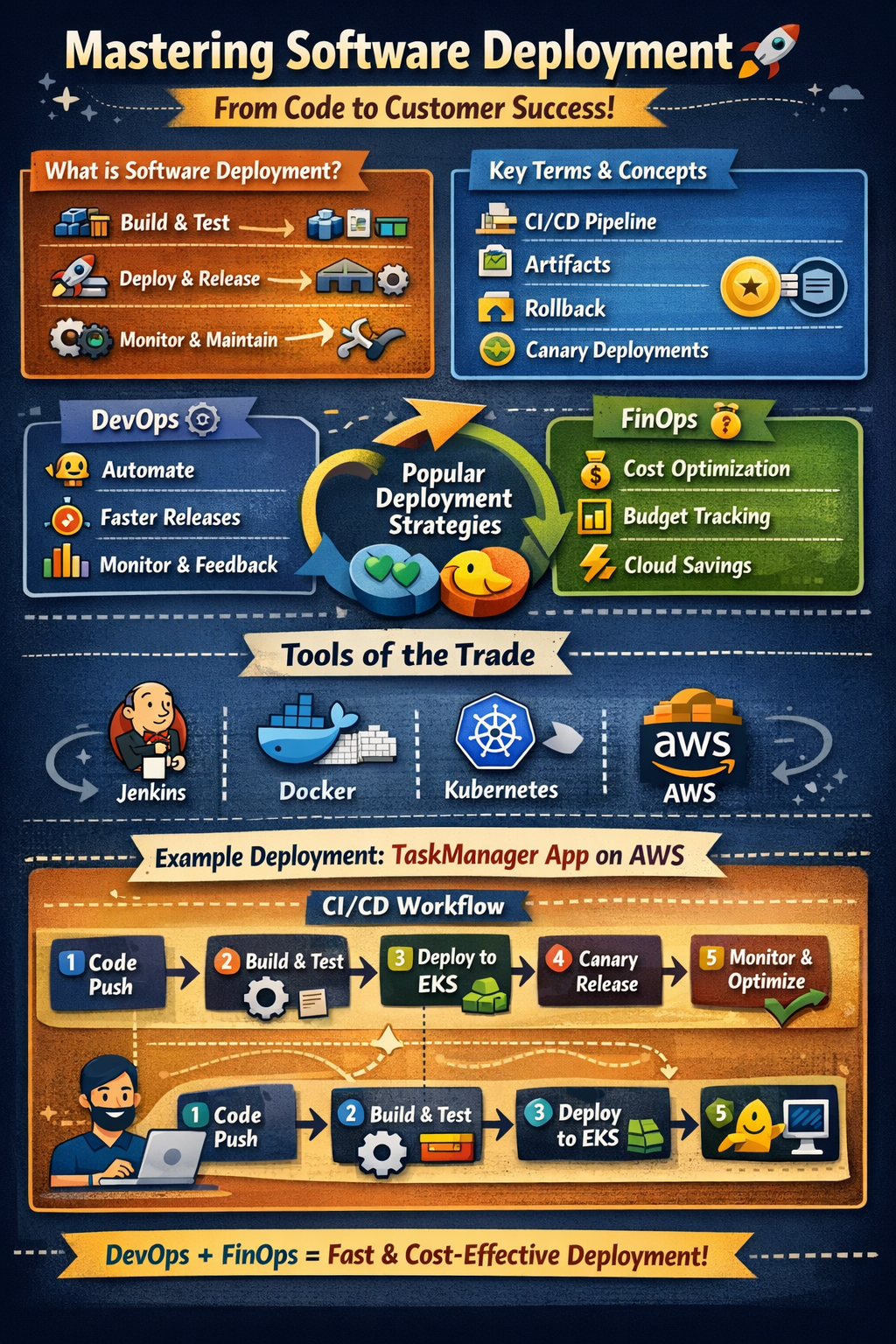
Software deployment is the final magic trick 🎩✨ where code written by developers finally reaches real users and starts solving real-world problems. But behind the scenes? There’s a full pipeline of processes, tools, automation, governance, finances, and optimization that decide how fast, safely, and cost-effectively software goes live.
Let’s break down this powerful journey — covering DevOps ⚙️, FinOps 💰, deployment strategies 🚢, tools, and a real-world cloud deployment example!
🧩 What is Software Deployment?
Software deployment is the process of releasing an application or feature from the development environment ➝ testing ➝ staging ➝ production, making it available to users.
It includes:

Deployment used to be manual — copying code into servers and restarting apps. Today, automation + DevOps make it fast, safe, and scalable 🚀
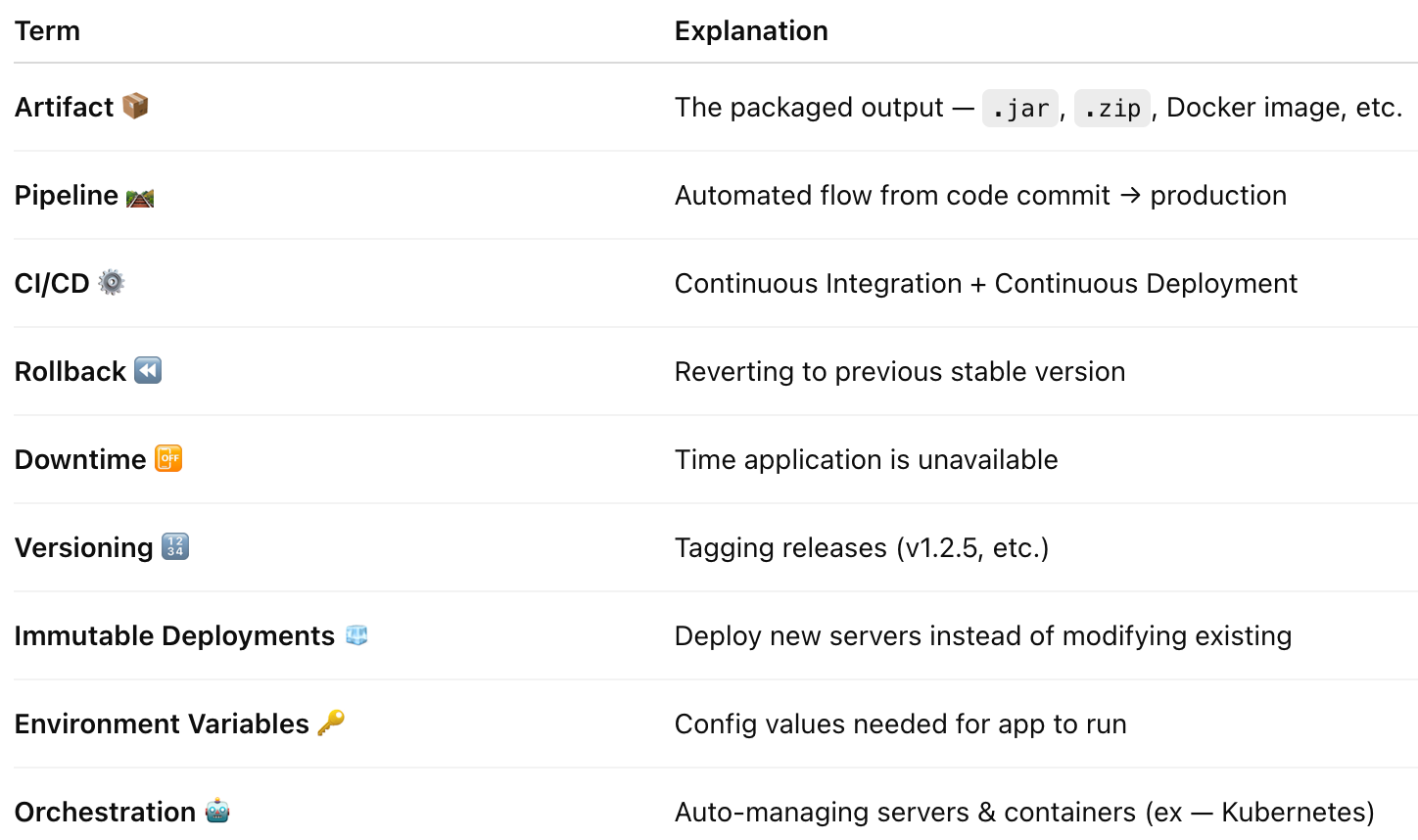
🧱 Key Concepts & Terminologies
🧰 Tools Used in Software Deployment
🏭 CI/CD + Automation
- GitHub Actions
- GitLab CI
- CircleCI
- Jenkins
- Azure DevOps Pipelines
🐳 Containers + Orchestration
- Docker
- Kubernetes
- ECS / EKS / AKS
- Helm Charts
☁️ Cloud Hosting + Infrastructure
- AWS EC2, Lambda, Elastic Beanstalk
- GCP Cloud Run
- Azure App Services
🌍 DNS, Networking & Delivery
- Cloudflare
- AWS Route53
- Content Delivery Networks (CDN)
📈 Monitoring & Rollbacks
- Datadog
- Grafana
- Prometheus
- New Relic
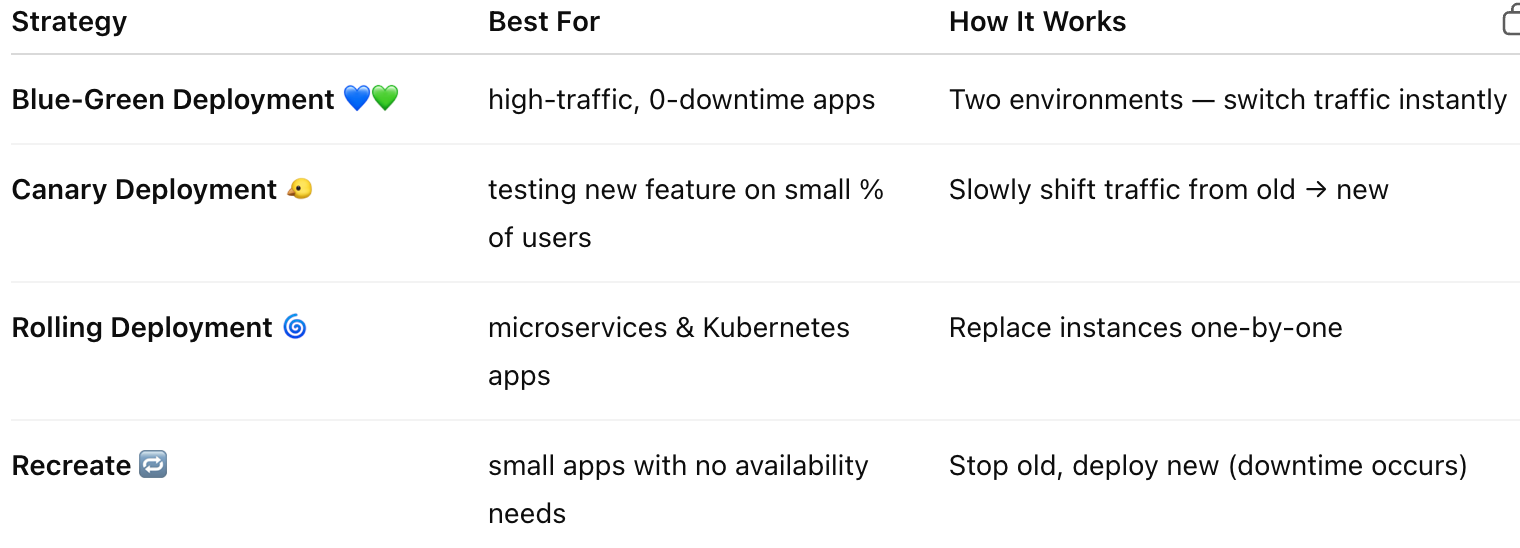
🧪 Deployment Strategies (How Releases Happen)
🧑🤝🧑 Where DevOps Comes In ⚙️
DevOps = Development + Operations, a culture and toolset that:
✔ Automates deployment
✔ Ensures faster, more stable releases
✔ Allows collaborative workflows between teams
✔ Enables continuous feedback + monitoring
DevOps philosophy in deployment:
- ⏱️ Release daily, not yearly
- 🤖 Automate everything
- 🧪 Test before deploy
- 🔥 Quick rollback when something breaks
- 📊 Monitor cost + performance
💰 How FinOps Plays a Role — Finance Meets Deployment
FinOps ensures cost efficiency in deployment:
- Optimize infrastructure cost 🧮
- Use right-sizing (don’t deploy huge servers for small apps)
- Shut down unused staging environments 📴
- Choose serverless to avoid idle cost ⚡
- Calculate ROI of new deployments 📊
- Assist DevOps in picking cheapest deployment pattern 💵
FinOps + DevOps Together =
👉 Fast delivery + Smart spending
👉 CI/CD automation + Cloud cost intelligence
👉 Business value aligned deployment 🚀
🧑💻 Example Setup — Deploying a Ruby on Rails App on AWS with CI/CD
Let’s imagine an app named TaskManager 📝
🏗️ Step-by-Step Flow
1️⃣ Developer pushes code to GitHub
2️⃣ GitHub Actions triggers CI pipeline
- Run tests (RSpec)
- Build Docker image → push to Amazon ECR
3️⃣ CD pipeline starts
- Kubernetes (EKS) pulls latest Docker image
- Deploy using Helm Chart
- Canary release → test live on 5% traffic
4️⃣ If stable ➝ automatically roll out to 100%
5️⃣ Datadog monitors CPU, memory, errors
6️⃣ FinOps dashboard tracks AWS cost for this deployment
🎯 Result:
- 0-downtime
- Quick rollback
- Full visibility on cost & performance
🧭 Best Practices for Software Deployment
- 🧪 Test automatically → no manual testing bottlenecks
- 🔄 Always enable rollback
- 🧊 Use immutable infrastructure (replace, don’t edit)
- 🕵️ Monitor after deployment
- 💸 Review cloud bill after every large update
- 🤝 Bring DevOps + FinOps + Product teams together
💡 Final Thoughts
Software deployment is not just pressing a button — it’s a science of stability, an art of automation, and a business-driven financial strategy.
Organizations that master deployment:
- Ship faster ⚡
- Fail less ❌
- Recover instantly 🔁
- Spend wisely 💰
- Serve users better 🧑💻❤️


Comments
Post a Comment